
BrainCheck AssessTM
BrainCheck Assess is an FDA Class II digital cognitive assessment that provides standardized, repeatable measures of cognitive function to support clinician-led interpretation and care planning across primary care, neurology, geriatrics, behavioral health, and research.
By moving beyond purely subjective impressions, BrainCheck Assess gives clinicians structured cognitive data that can be interpreted alongside history, exam findings, and functional status, never in isolation.

Cognitive Domains Assessed
BrainCheck Assess evaluates key cognitive domains commonly impacted by neurological, psychiatric, and neurodegenerative conditions, including:
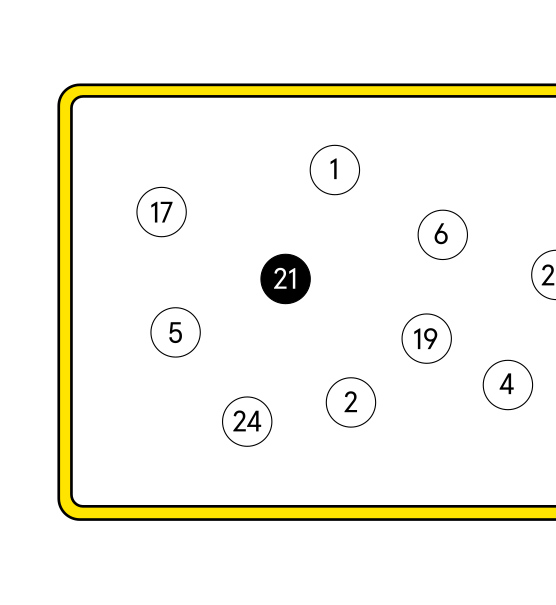
Measure attention with Trails A and B
Trails A & B are widely used neuropsychological tests that measure visual search speed, scanning, processing speed, mental flexibility, and executive functioning. These tests provide insight into cognitive function in the frontal lobe, and also in the parietal and occipital lobe.
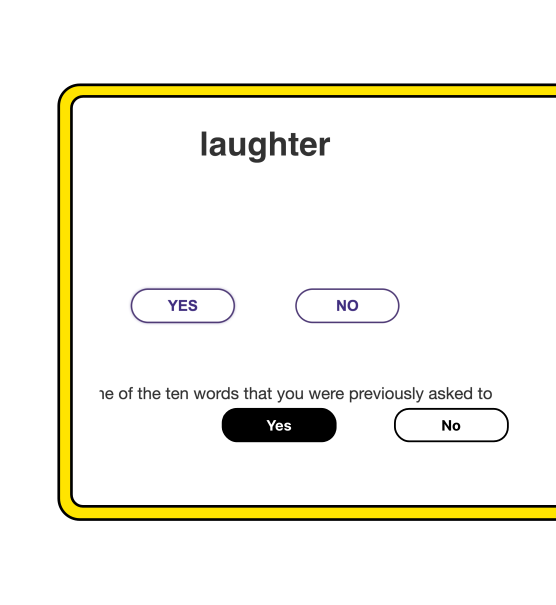
Check memory with immediate and delayed recognition
Immediate and delayed recognition tests assess the ability to recognize previously seen items, determining function in the temporal, frontal, parietal, and occipital lobes.
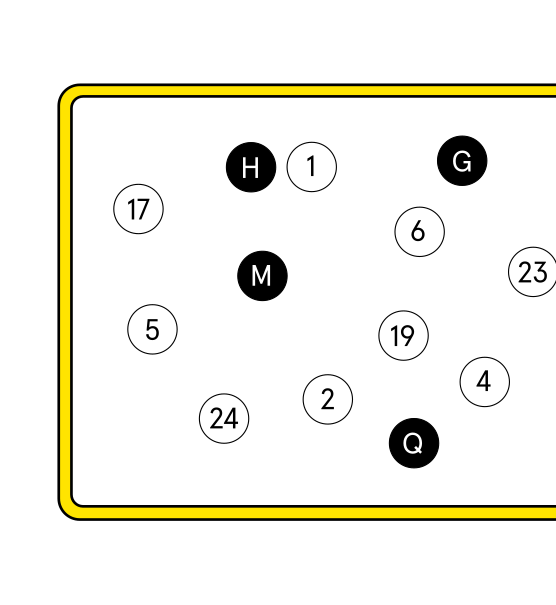
Assess mental flexibility with Trails B
Trails B is an established neuropsychological test that evaluates cognitive flexibility, attention, visual scanning, and memory by assessing ability to switch between numbers and letters while connecting circles in ascending order.
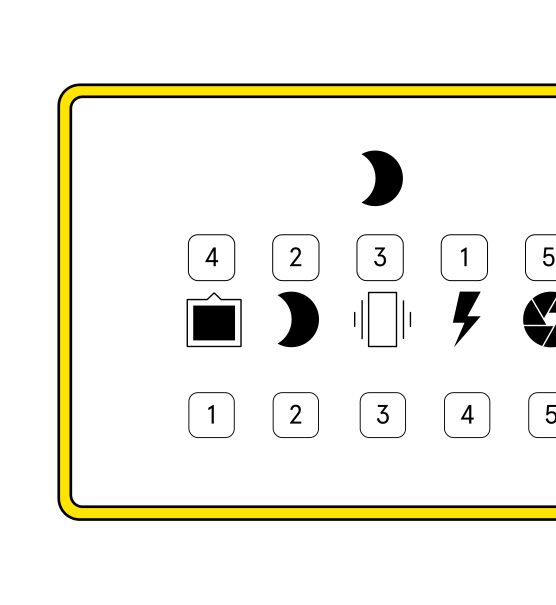
Evaluate processing speed with Digit-Symbol Substitution
The Digit-Symbol Substitution test measures processing speed and accuracy. This proven test assesses function primarily in the frontal lobes.
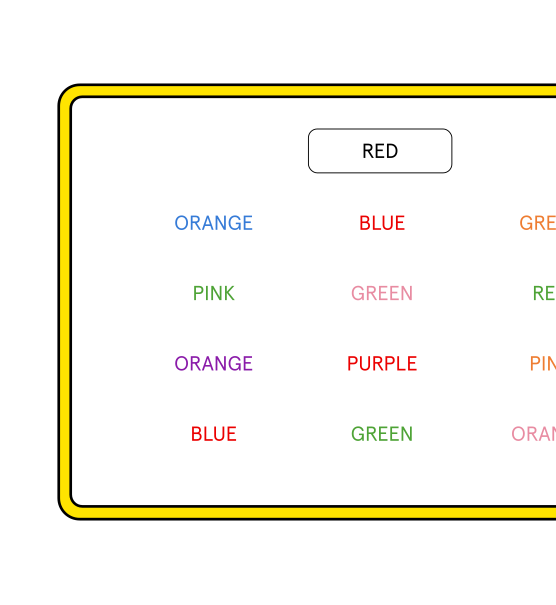
Evaluate executive function with the Stroop Color and Word test
The Stroop Color and Word test measures reaction time required to overcome cognitive interference. This proven test assesses function primarily in the frontal lobes.
Measure attention with Trails A and B
Trails A & B are widely used neuropsychological tests that measure visual search speed, scanning, processing speed, mental flexibility, and executive functioning. These tests provide insight into cognitive function in the frontal lobe, and also in the parietal and occipital lobe.
Check memory with immediate and delayed recognition
Immediate and delayed recognition tests assess the ability to recognize previously seen items, determining function in the temporal, frontal, parietal, and occipital lobes.
Assess mental flexibility with Trails B
Trails B is an established neuropsychological test that evaluates cognitive flexibility, attention, visual scanning, and memory by assessing ability to switch between numbers and letters while connecting circles in ascending order.
Evaluate processing speed with Digit-Symbol Substitution
The Digit-Symbol Substitution test measures processing speed and accuracy. This proven test assesses function primarily in the frontal lobes.
Evaluate executive function with the Stroop Color and Word test
The Stroop Color and Word test measures reaction time required to overcome cognitive interference. This proven test assesses function primarily in the frontal lobes.
FDA Regulation & Oversight
BrainCheck Assess is regulated as a Class II medical device by the FDA.
As part of this designation:
- BrainCheck maintains an FDA-compliant quality management system
- BrainCheck Assess is subject to FDA audits and regulatory oversight
- Development, validation, and change-control processes follow FDA requirements
This regulatory framework ensures consistency, reliability, and clinical rigor in real-world use.
Designed for Real-World Clinical Use
BrainCheck Assess is built for real-world clinical environments:
- Digital administration on supported devices
- Structured outputs that support documentation and follow-up
- Suitable for in-clinic or supervised administration, depending on workflow
The platform is designed for efficient use by clinicians, staff, and patients while maintaining clinical rigor and clinical oversight.

Scale, Adoption, & Real-World Use
Over the past 12 months, BrainCheck Assess has been administered more than 100,000 times, demonstrating:
-
Reliability at enterprise scale
- Suitability for high-volume clinical workflows
- Broad adoption across diverse care settings
This real-world usage reinforces BrainCheck’s focus on practical, scalable cognitive care.
Security, Privacy, & Compliance
BrainCheck operates in regulated healthcare environments and maintains:
- HITRUST certification with ongoing audits
- Support for HIPAA-compliant workflows
- Execution of Business Associate Agreements (BAAs) with covered entities
These controls support secure handling of patient data across clinical deployments.

Supporting Longitudinal Cognitive Care
BrainCheck Assess is designed to support ongoing cognitive care, not one-time testing. Repeated assessments enable clinicians to:
-
Monitor cognitive change over time
- Identify meaningful trends or deviations from baseline
- Inform follow-up evaluation, referrals, or care planning
When used together with BrainCheck Digital Screeners and Care Plan, BrainCheck Assess helps clinicians move from early identification to structured assessment, documentation, and ongoing care planning within a single platform.

Your questions, answered.
Key things to know and discover about cognitive assessments.
Cognitive assessments are crucial to empower early detection of cognitive impairment. Studies show a percentage of decline can be preventable by addressing modifiable risk factors and making simple lifestyle changes. Early intervention maximizes the window of opportunity and can significantly improve outcomes and quality of life.
Patients can find more in our patient support resources.
Traditionally, cognitive assessments have been conducted using paper and pencil tests, such as the Montreal Cognitive Assessment (MoCA) and the Mini Mental Status Exam (MMSE) – but digital solutions like BrainCheck Assess have revolutionized this process. Now, providers ranging from primary care to specialists can conquer the constraints of outdated assessments and easily evaluate patients’ cognition, on any device, in any location.
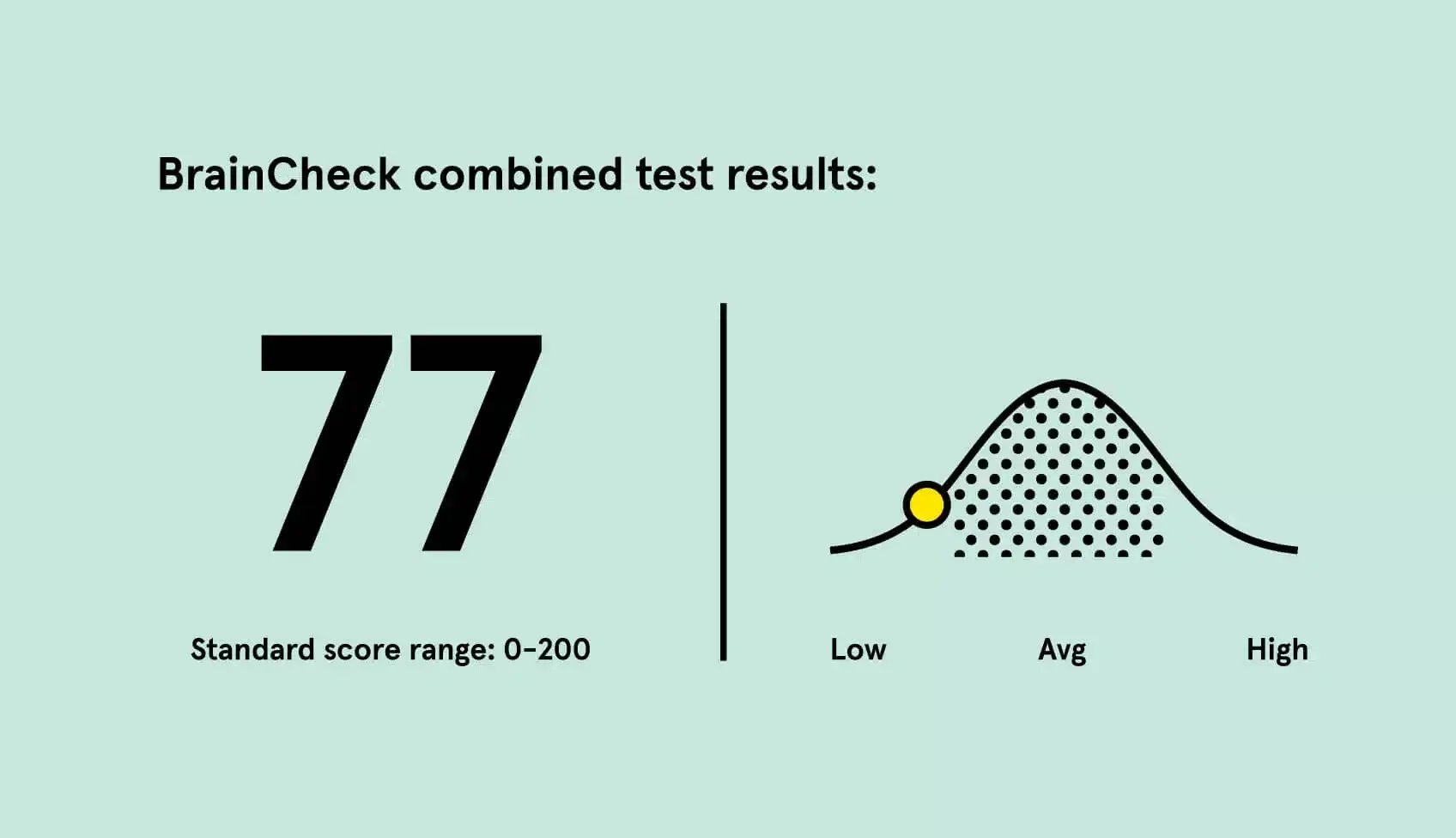
Cognitive tests evaluate brain function to identify potential signs of impairment, but the insights provided may vary. To ensure accurate results, it is important to measure cognition comprehensively. BrainCheck Assess evaluates a range of key neurocognitive domains, including memory, attention, executive function, and mental flexibility. It highlights areas of strength and weakness, tracks changes over time, and helps guide clinical decisions with detailed, actionable insights.
BrainCheck Assess is a FDA Class II medical device that easily and objectively detects subtle signs of cognitive impairment. Leveraging clinically-validated digital versions of familiar screeners, it empowers providers to precisely measure performance across multiple cognitive domains – offering the most flexible and convenient solution.

Did you know?
Listening to music stimulates more areas of the brain than almost any other activity.